This essay discusses gender-based violence. It is published in full, in Glacia's own words.
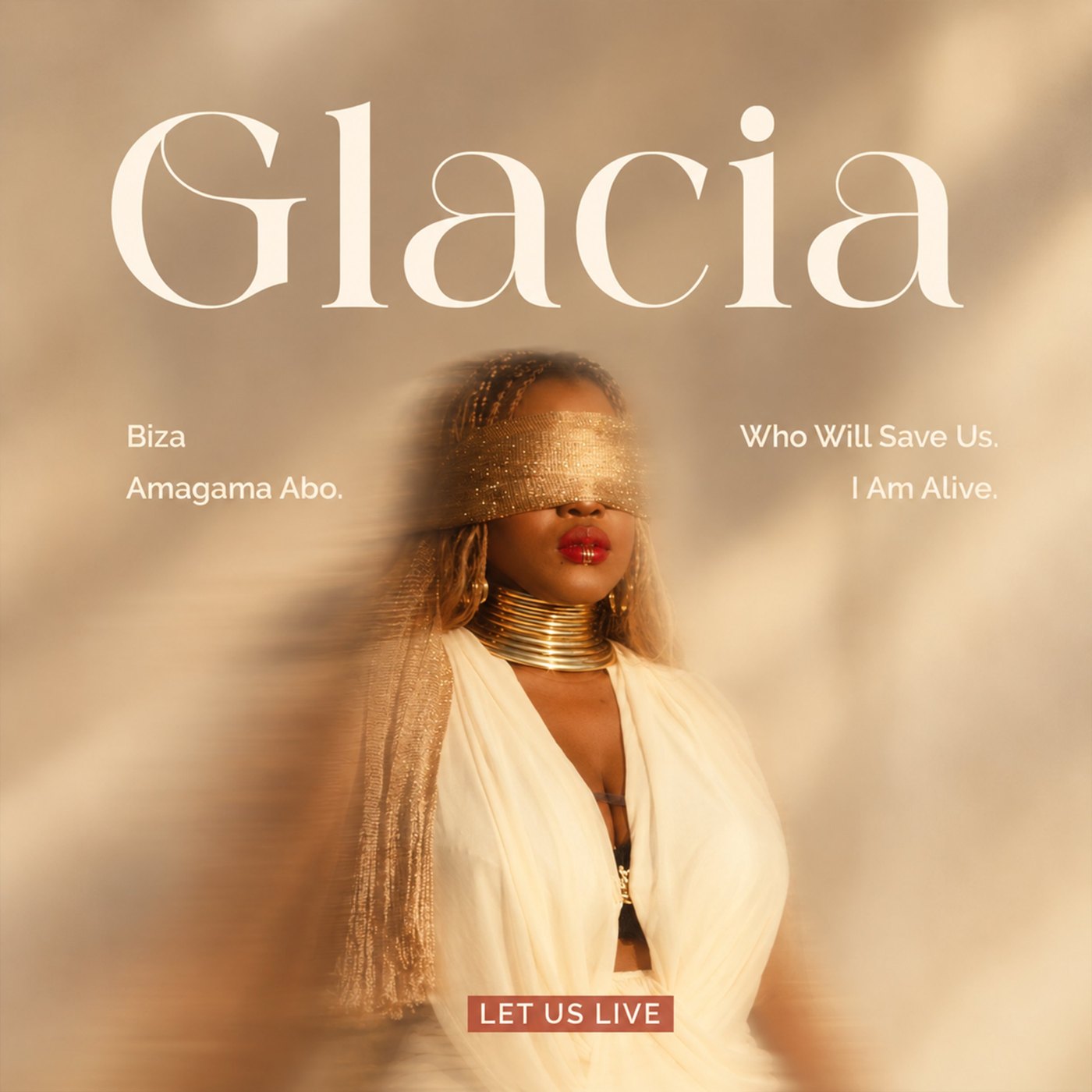
Let Us Live came from pain. Last November I came across Women For Change and started reading the stories they were sharing about women in South Africa whose lives had been taken through violence. I cried because there were so many. So many names, so many women, so many lives cut short in ways that felt cruel, careless and senseless. What stayed with me was how little value seemed to be placed on women’s lives. Women give life, and yet the lives of women are taken by people who were themselves given life by women. I still struggle with that. How do we come from women, depend on women, love women, call women mother, sister, daughter, grandmother, and still live in a world where women are raped, beaten and killed as though their lives carry no weight? I could not make sense of it. I still cannot.
When something affects me deeply, I write. The words that came were Ngubani ozosisiza. Who will save us? That question came from helplessness. I did not have an answer. I just had pain, anger, fear and this feeling that I needed to put it somewhere, so I wrote the song.
I contacted a producer in South Africa who I had worked with for years, actually the first producer I ever worked with, and told him that I had seen what was happening, that I had written something, and that I wanted to build a project around it. We started working on it. The original plan was to release the song around 21 November last year, but the production was never completed. He disappeared during the process and the song sat unfinished for months. I kept hoping he would come back. He did not. At some point I had to decide whether I was going to let the song die there or find another way.
For a moment I considered giving it to a Danish producer I work with. He heard the idea and what we had already created and was very interested in working on it, but something in me hesitated. I needed someone closer to the feeling of the song. Someone Black. Someone African. Someone who understood mourning, not just musically, but emotionally and spiritually. There are some things you cannot explain in a production brief. There are feelings that live deeper than words, in memory, in culture, in the body, in spirit.
Through my longtime mastering engineer, who is South African, I was connected with my current producer, who is African and based in South Africa. He understood the song in a way I had hoped someone would. He brought it back to life. And somewhere along the way, one song became three.
Who Will Save Us is the helplessness. It is the question. It is the cry. Then came Biza Amagama Abo, Call Their Names. That song came from thinking about how easily women disappear into numbers. We hear statistics all the time. This many women were killed. This many women were assaulted. This many women are missing. But a number is easy to distance yourself from. A name is different. A name belonged to someone who laughed, loved, annoyed people, had dreams, had a favourite song, had a favourite food, had people who loved her, had plans for her life. She was somebody before the worst thing that happened to her. So we call their names.
Then comes Phakama. Rise. That is where something changes. We are no longer only asking who will save us. We begin to stand. We begin to resist. We begin to fight for our lives. So Let Us Live moves from helplessness, to remembrance, to resistance. I did not sit down and plan that journey neatly on paper. I realised afterwards that the songs had created their own emotional path.
Living outside South Africa has somehow made me more South African. I laugh when I say that, but it is true. I do not think I have ever said I am South African as much in my life as I have since leaving South Africa. When you are home, you do not need to explain who you are. You just are. But when you become a foreigner, people ask. Where are you from? And then the questions come. Nelson Mandela. Apartheid. The 2010 World Cup. Rugby. Politics. History. Languages. Current affairs. Sometimes people would ask me something about my own country that I realised I did not know enough about myself. That made me want to know more.
I think sometimes you have to leave home before you really start looking at it. Being away has made me appreciate South Africa differently. The beauty, yes, but more than anything the people. The warmth. The humour. The way strangers speak to each other. The way people laugh even when life is hard. The openness. The humanity. That spirit of abantu.
There is also something else that feels deeply South African to me. We sing and we dance through everything. When we are happy, we sing. When we are sad, we sing. When we protest, we sing. When we celebrate, we sing and dance. Even in grief, there is music. Even in anger, there is rhythm. We are expressive people. We speak our minds. We feel things openly. So when I was reading those stories and feeling all of that pain and anger, writing a song did not feel separate from the emotion. It felt natural. It felt like a way of carrying it. Sometimes music is not something you make after the feeling has passed. Sometimes music is how you survive the feeling while you are still inside it.
And I think that is also why Let Us Live could never only stay in sorrow. South Africans sing in sorrow, but we also sing ourselves into courage. We sing in protest. We dance in celebration. We use our voices when words alone do not feel enough. That spirit is inside this project too.
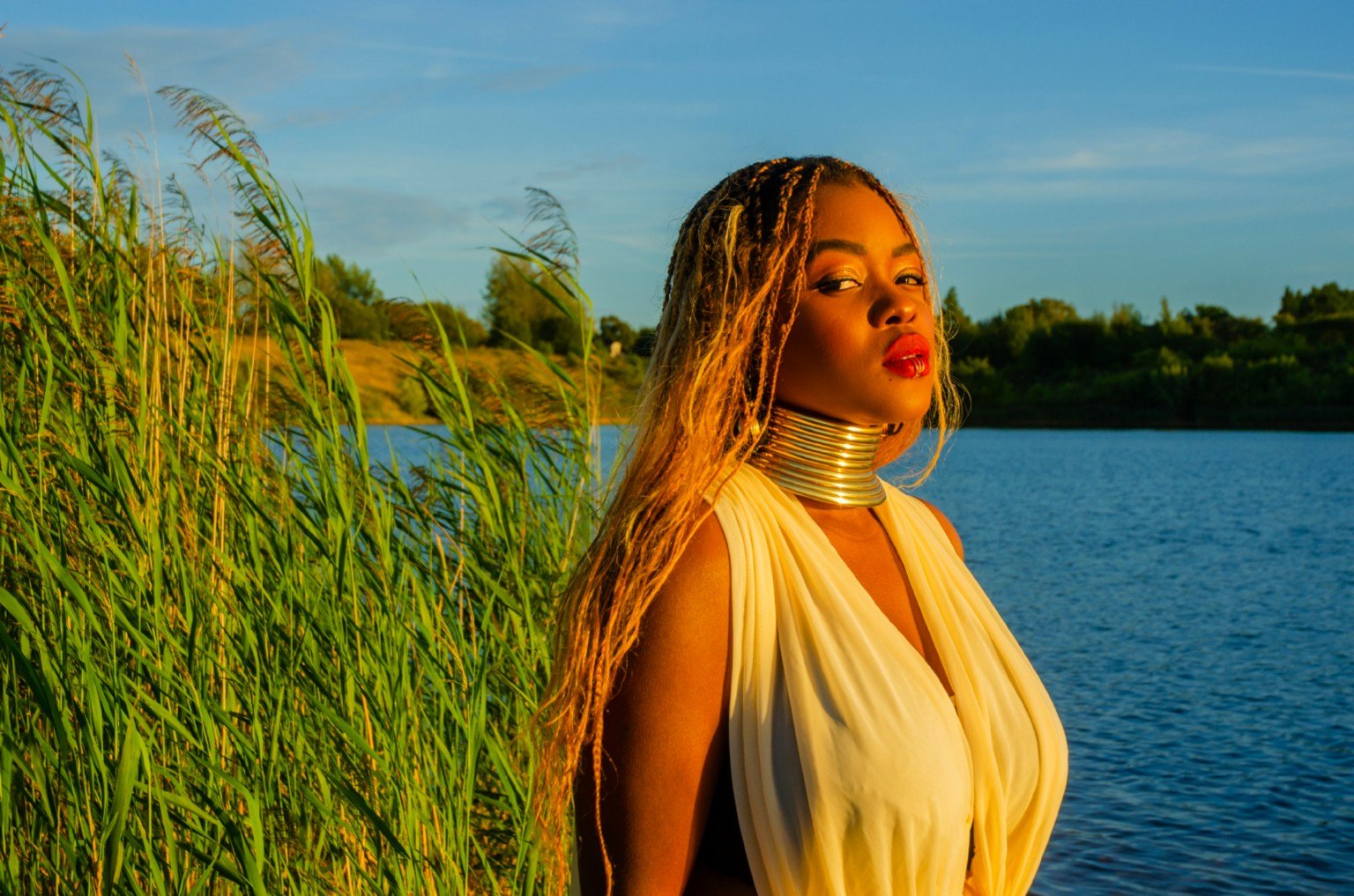
But loving South Africa from a distance is complicated. I love my country deeply, and I am afraid of some things about my country deeply. Both are true. I can miss home and still wonder whether I would ever feel completely safe living there again. That is difficult to admit. What does it mean to love a place and still be afraid of it? What does it mean to think that one day I may want to return home permanently, but I have to consider whether I will feel safe there as a woman?
I do not want to live in fear. I do not want women to live in fear. I do not want women to spend their whole lives calculating danger. Where they walk. Who they trust. What time they come home. Whether somebody is following them. Whether saying no will make somebody violent. Whether the person who says they love them might one day become the person they fear. That is not freedom.
And that is why the us in Who Will Save Us matters so much to me. The us is me. It is women. It is the women of South Africa. I am not standing outside the story asking who will save those women. I am asking who will save us, because I am one of us. I am a South African woman. I happen to live in Denmark. Distance does not remove me from that.
The same is true with language. I used English because I wanted the project to be inclusive. I wanted someone outside South Africa to understand the message and enter the story. But isiZulu is there for something else. Zulu speaks to the spirit of my people. To abantu. There are things English can explain, but it cannot always carry the same spiritual weight. Ngubani ozosisiza means Who will save us, but to me it does not feel the same in English. In isiZulu it feels closer. It feels heavier. It feels communal. It feels like women calling. It carries mourning differently. It carries home differently. It carries spirit.
The timing of the release has also been something I have struggled with since last week's tragedy. Who Will Save Us was finalised at the beginning of August. The second song was completed around the middle of August. The music was registered for distribution in August and the release process was already moving because I needed around six weeks of lead time. Then this recent wave of violence and public outrage happened, and honestly, it made it hard for me to want to continue as planned. Being sensitive to the seriousness of what is happening matters deeply to me, and I do not want this moment to look like a convenient opportunity for my music.
I remember calling a South African friend and saying, what do I do now? I do not want it to look like I am using this tragedy to push a song. That really bothered me. Because yes, the project comes from this pain. It exists because women were already suffering. It was born from women whose lives had already been taken. But there is a difference between creating something from pain and using pain. That line matters to me.
I never want a woman’s death to become marketing for my music. I never want grieving families to become a backdrop for a release. At the same time, I cannot pretend the music is separate from what is happening. It is not. This is the wound it came from. So I am trying to move carefully with it. To be honest about where the music came from. To let the issue remain bigger than the song. Bigger than me.
At one point I tried to understand gender based violence through research. I thought maybe if I understood the psychology, the culture, the systems and the patterns, something would begin to make sense. But the deeper I went, the worse I felt. I was reading one horrific story after another. And something strange started to happen. I live in Denmark, one of the safest countries in the world, and yet I started feeling afraid. Paranoid. Unsafe. The violence I was reading about followed me mentally even though I was far away from it. Eventually I had to stop. It was affecting me too deeply.
That experience taught me that I do not have the answer. I wish I did. I cannot research my way into a solution. And I cannot write three songs and pretend they are going to solve something this enormous. Maybe Let Us Live is not the answer. Maybe it is a place to hold the pain. A place to remember. A place to ask the question. A place to rise.
More than anything, I want a woman to hear these songs and feel less alone. I want her to feel that somebody sees her. That somebody understands the fear. That somebody understands the anger. That somebody is saying I hear you, I see you, I am you.
And maybe a man hears it too. Maybe somebody who has hurt women hears something in it. Maybe somebody who could one day hurt a woman hears it and thinks again. I do not know. I cannot control what music does once it leaves me. But I still believe music can enter places arguments sometimes cannot.
I do not speak for every South African woman, and at the same time, in some way, I do. Not because our experiences are all the same, because they are not, but because I am one of us. I speak as one South African woman, one voice, one person trying to make sense of something that still does not make sense to me. And ultimately, I think that is what Let Us Live is asking for. Not anything complicated. Not anything extraordinary. Just the most basic thing. The right to live.
✦ ✦ ✦
Glacia · @justrah_music